
Tourist in Vernazza
Vernazza, an ancient village of "fishermen who cultivated the land" of the Cinque Terre is probably the most fascinating stage.
With its pastel-colored houses, the square, the small beach with the rocks that line the base of the church and the small harbor crowded with boats, has always attracted and fascinated tourists from every place.
Going down the steep and narrow stairways, crossing the narrow streets that cross the streets of the center in a magical grid is an experience to be discovered step by step.
PATHS
Vernazza is a small town and everything is within reach. So, thanks to the lucky position of the structure, for those who love trekking it will be really easy to reach the paths.
In fact from Via Roma, leaving the apartment Sole e Luna and heading towards the square, you can access - on the left - towards the stairway that goes up to Via Carattino and leads to the path to Corniglia and - to the right - towards the stairway that goes up to Via Ettore Vernazza and leads to the path to Monterosso (see points 9 and 10 on the map).

From Suites 1 and 2 (as these are already in Via Carattino) the path to Corniglia is even easier to reach. If you want to choose the path to Monterosso just get off in Via Roma and go up the stairs on the opposite side of the road.
More information on the trails can be found on the site of the Cinque Terre National Park.
RENT A BOAT
Vittoria Rooms has a boat rental with driver. For more information go to the dedicated page: boat tour.
FERRIES
In spring and summer, when the sea is calm, it is possible to use the scheduled service of the boats that travel along the Cinque Terre coast. More information on routes and fares can be found on the Navigazione Golfo dei Poeti website.
THE CINQUE TERRE CARD: what they are for
There are two types.
- The Cinque Terre Trekking Card allows: 1) Access to the Park area, 2) Guided tours according to schedule, 3) Use of the bus service operated by ATC within the countries, 4) Use of pay toilets, 5) Participation in laboratories of the Park Environmental Education Center, according to schedule, 6) Wi-fi navigation in the Park Hot Spots, 7) Reduced admission to the Civic Museums of La Spezia: Amedeo Lia, Castello San Giorgio, CAMeC, Sigillo, Palazzina delle Arti, Etnografico, Diocesiano.
- The Cinque Terre Card Multiservice TrainAllows the same services as the Cinque Terre Trekking Card plus: The use of the train on the Levanto La Spezia Centrale route and vice versa (on Regional and Direct Interregional trains in 2nd class) for unlimited travel in the period of validity of the card chosen by the user.
More information on the Cinque Terre Card can be found on the site of the Cinque Terre National Park.
BRIEF HISTORY
The built-up area stands on the remains of the Castrum Vernatio, a defensive construction of the then lords of the town the Marquis Obertenghi (XI century).
The first mention of a castle in Vernazza dates back to the 13th century, but it is believed that the first nucleus of the present Castello Doria dates back to the 11th century and that it was therefore built by the Obertenghi during their rule. The cylindrical tower stands at the center of the area and is the oldest part of the fortification. The building has an irregular plan, adapted to that of the rock spur on which it was built.
Overlooking the harbor is the Church of Santa Margherita di Antiochia (13th century) in Ligurian Gothic style, it is admired for its octagonal bell tower with the ogival dome and the entrance next to the apse.
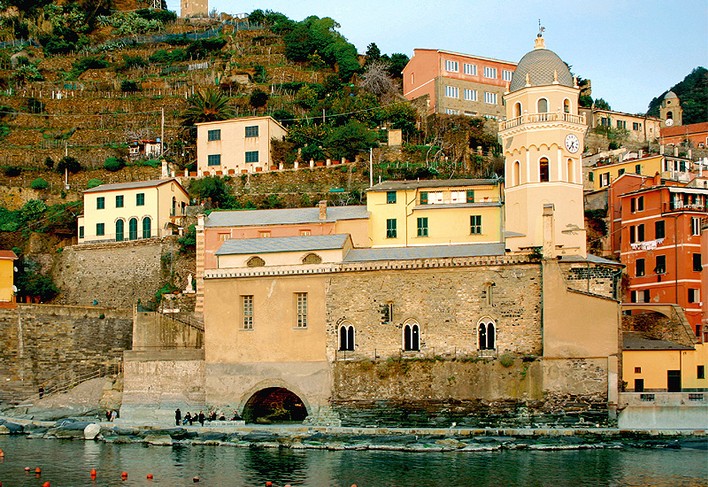
In the upper part of the village the Convent of the Observant Friars Minor (XVII century) and the Church of San Francesco (XVII century) are interesting. The first is the Town Hall, the second one better known as the Chiesa dei Frati, now deconsecrated, is used as an exhibition center for exhibitions and events.
EVENTS
On 20 July there is the Feast of Santa Margherita di Antiochia, the town's patron saint, honored with typical fireworks and banquets.
Every year in the summer between early July and late August a day is chosen for the Pirate Festival. There is never a specific day for the event that is organized with figures that "storm" the village by cheerfully simulating the landing of the Saracens.
TYPICAL PRODUCTS
The typical products of Vernazza are the same typical products of the Cinque Terre or those of Mediterranean agriculture such as wine, oil and lemons.
The olive tree, particularly widespread in the area as well as in all of Liguria, is the plant whose fruits produce the famous and characteristic olive oil, present almost everywhere in Ligurian dishes and in Vernazza cuisine.
Then there is the vine, from which the grape from which the white Cinqueterre Doc and the Sciacchetrà Cinque Terre Doc is obtained, the renowned passito typical of the area.
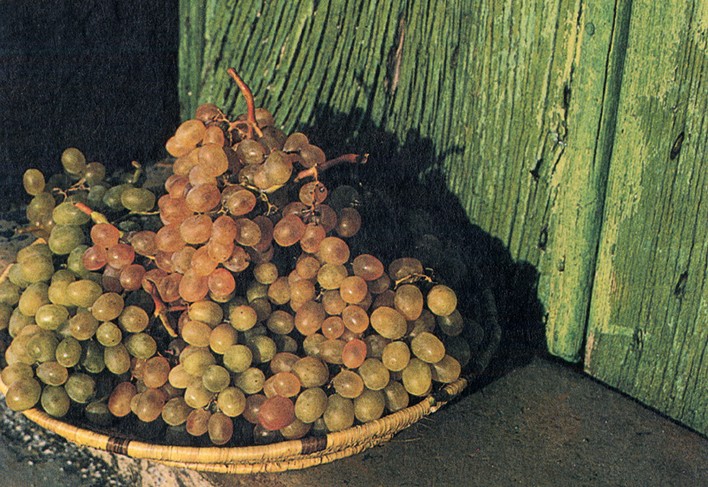
The most significant dishes are those based on fish, which have been able to maintain their characteristics of simplicity and genuineness over time.
The gastronomy of this part of the Ligurian Riviera is characterized by the fact that the meat is present in a very modest way since the land has never provided ideal conditions for breeding.
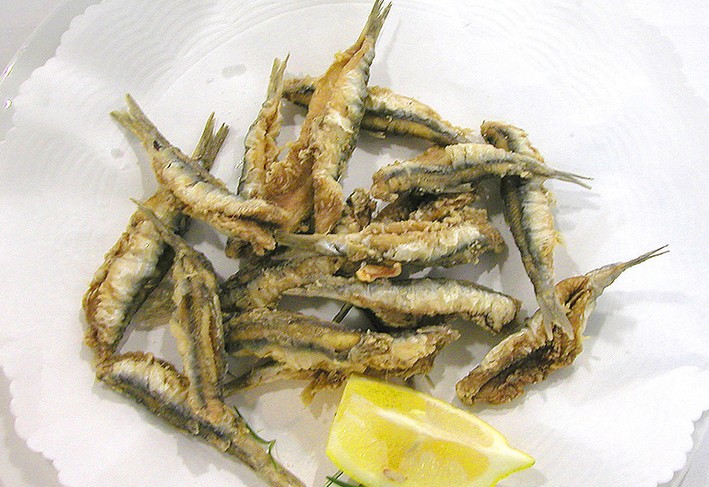
From the hinterland, however, some fundamental elements of the cuisine of Vernazza come: mushrooms, which are combined with meat as well as fish, the oil present now in any recipe, the products of orchards and vegetable gardens and above all, aromatic herbs or cultivated that enrich all the dishes of the local culinary tradition.
Among all the herbs dominates the basil which grows here with a unique flavor and which is the main ingredient of the sauce now famous throughout the world: pesto.
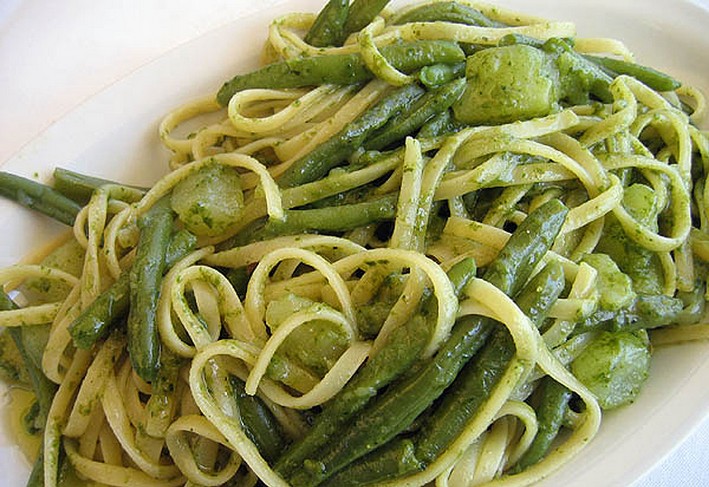
Also in Vernazza, as in all of Liguria, one can find various types of focaccia and the famous farinata (porridge) based on chickpea flour.
But the typical dish of Vernazza that best represents its tradition is the Tiàn alla Vernazzaese (Vernazzese style pan). It is prepared with thinly sliced potatoes and anchovies, seasoned with fresh tomatoes, oil, white wine, garlic, lemon peel and spices, then baked.
Among the desserts we should mention the Stalìn cake, which takes its name from the creative pastry chef who invented it more than forty years ago and is very similar to a tart; stuffed with cream and dark chocolate and then covered with a second layer of pastry.